

25 Sep
Evie Sutcliffe and Lochie Springett: 'The Many Forms of Modernist Life-Writing'
Evie Sutcliffe and Lochie Springett:
'The Many Forms of Modernist Life-Writing'

Laura Marcus Life-Writing Workshop
Can writing be both experimental and personal?
In 1919, near the height of the period of literary experimentation known as modernism, the eminent poet and critic T. S. Eliot declared that the 'emotion of art is impersonal'. Such assertions laid the foundation for a narrow view of modernist literature as antithetical to life-writing, which literary scholars such as Max Saunders have challenged in recent years. Although modernist writers tended to shy away from producing conventional autobiographies and biographies, they did in fact compose life-writing texts of various kinds, including (auto)biographical novels, essayistic fragments of memoir, and texts that became known as the New Biography.
This panel of postgraduate and early-career researchers will explore in further depth the sheer diversity of forms of modernist life-writing.
Lochie Springett will invite us to consider the modernist long poem as a form of life-writing. What might it mean to write a life in verse? And how might this question elucidate the deeply uncomfortable tension between openness and constraint that characterizes Robert Lowell’s letters to Elizabeth Hardwick? Tracing the figure of the ‘eelnet’ in Lowell’s thought, this paper will explore how the versification of prose might, in itself, constitute an act of life-writing. Where a previous generation of poets had sought to develop styles that could contain historical documents and non-literary sources, Lowell’s use of personal letters represents a reflexive turn that is as fraught as it is generative. For like the eel-fishers in Pound’s Cantos and Williams’s Paterson, whose porous nets always capture both too much and too little, Lowell’s autobiographical verse is marked by its extraordinary tangle of excess and inadequacy.
Evie Sutcliffe will draw our attention to the slippage between private and public forms of writing, with a focus on Martha Gellhorn, perhaps the most prolific war journalist of the twentieth century. Her career spanned six decades, fifty-three countries, and almost every major conflict post-World War Two. Lost in the archive, Gellhorn's 1937-38 diary from her first job reporting on the Spanish Civil War provides an insight into how the fledgling writer found her voice. Together, we'll begin to answer the following questions: how does the private diary shape the printed text? Why does Gellhorn's diary read more like an article, and her articles read more like a personal narrative? And how does political crisis impact this slippage in form?
Speaker Details:
Further details to follow.
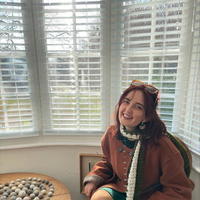
Evie Sutcliffe is a second-year DPhil candidate in the Faculty of English at the University of Oxford. Their thesis asks: How does emergency shape literary form? Working on three women writers from the 1930s (American war journalist Martha Gellhorn, American poet Muriel Rukeyser, and British author Rebecca West), Evie interrogates their various waves of response to political crisis, paying close attention to the slippage in form. Her genetic methodology reads these writers’ unpublished diaries alongside their printed works to determine how immediate experience is mediated into public response.

Lochie Springett is a DPhil candidate and Drue Heinz Scholar in the Faculty of English at the University of Oxford, working under the supervision of Professor Hannah Sullivan. His doctoral research considers a group of American poets, from Walt Whitman to Jay Wright, who each investigate what it might entail to spend one’s entire life writing a single poem. Together with Mantra Mukim, he is editing a collection of essays on modern poetry and the concept of ‘measure’.
Third speaker TBA.
About the Laura Marcus Life-Writing Workshops:
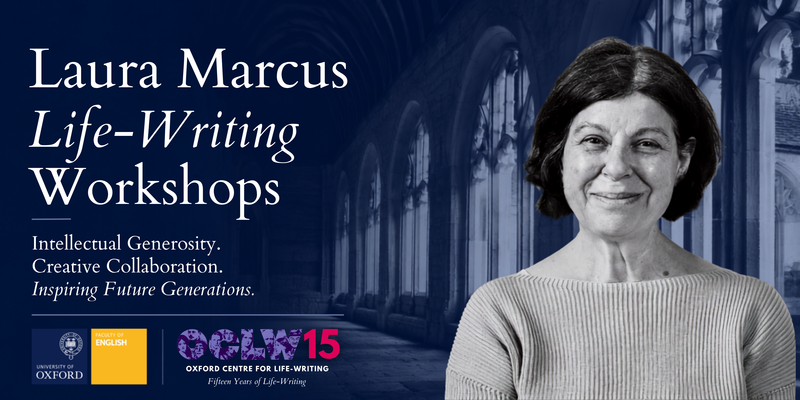
The Laura Marcus Life-Writing Workshops were established in 2022 by OCLW’s Professor Dame Hermione Lee, Professor Elleke Boehmer, and Dr Kate Kennedy in collaboration with the Faculty of English at the University of Oxford. The workshops celebrate the life and intellectual legacy of Professor Laura Marcus (1956–2021): one of the most influential literary scholars of her generation and a much-loved colleague, teacher, and friend.
Held twice each term, the workshops provide a rare and valuable space for sustained intellectual exchange between students, academics, and writers. They foster conversations around creative practice and academic research, bringing together established and emerging voices. Their purpose is not simply to present completed research, but to create a collaborative intellectual space in which ideas can be developed, tested, challenged, and refined.
As part of The Oxford Centre for Life-Writing’s fifteenth anniversary fundraising campaign, we are seeking to establish The Laura Marcus Fund to secure the future of the Laura Marcus Life-Writing Workshops.
By donating to the Laura Marcus Fund, you will help ensure that Laura’s vision of scholarship—rigorous, generous, imaginative, and collaborative—continues to inspire future generations.
Find out more and donate here.
Further Details and Contacts:
This is an in-person event and will not be recorded.
This workshop is exclusively open to current members of the University of Oxford. Workshop places will be allocated on a first-come, first-served basis, with priority given to members of the Faculty of English.
Registration is required and will close at 17:00 on Tuesday, 17 November 2026. Confirmation of successful registration will be sent soon after.
If you are able, please consider donating £5, £10, £20, or more to support OCLW’s free events, outreach activities, and programmes, helping us to keep life-writing open to all.
Donations can be made when booking your place or via our online donations portal. Every gift makes a difference. No one will be turned away for lack of funds.
Queries regarding this event should be addressed to Dr Julia Dallaway.
move to carousel movement controls

20 Oct
27 Oct

30 Oct
3 Nov

17 Nov

24 Nov
1 Dec


